CDN transporter collaboration with David Raulet published in Nature
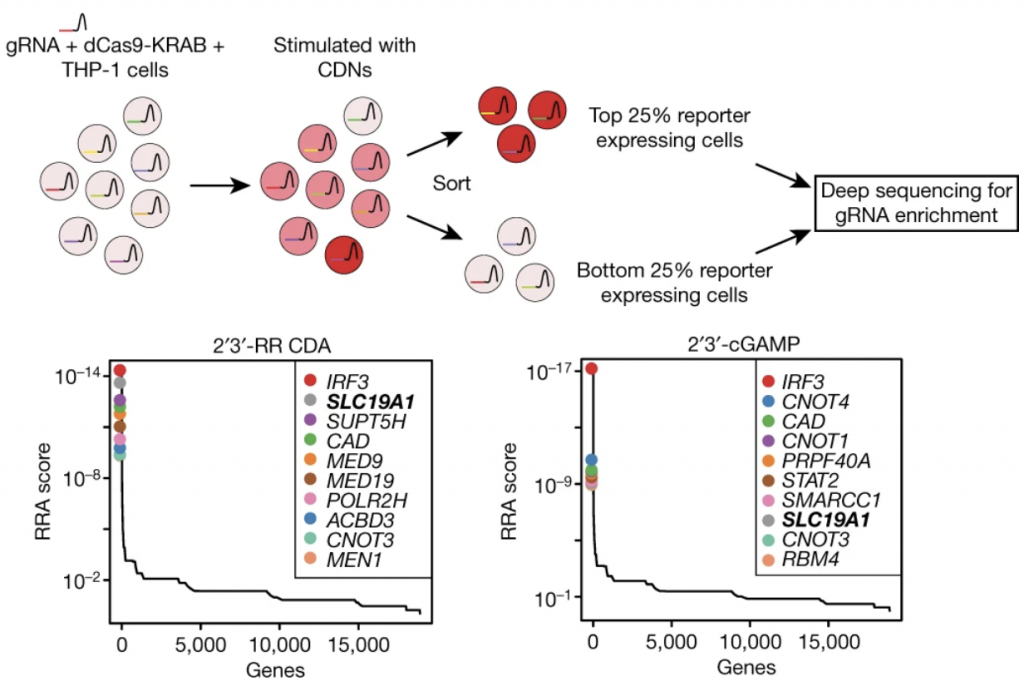
Cells have many ways to figure out that something is wrong. One of these is cGAS, which makes a cyclic dinucleotide (CDN) to activate STING innate immune signaling. CDNs are made during bacterial infection and tumor progression, and CDN derivatives are in development to re-activate immune cells next to a tumor. But how do CDNs secreted into the environment get into a target cell? This was the question asked by David Raulet’s lab, who collaborated with us on a genome-wide CRISPRi screen to find the CDN transporter. We helped the Raulet lab identify the folate transporter (SLC19A1) as a CDN importer. The Raulet lab plus further collaboration with Joshua Woodward’s lab figured out the mechanism. Lingyin Li’s lab also identified the folate transporter in a parallel collaboration with Mike Bassik, reported in Molecular Cell. Congrats to former lab members Benjamin Gowen and Stacia Wyman, who were authors on the paper, now out in Nature!