
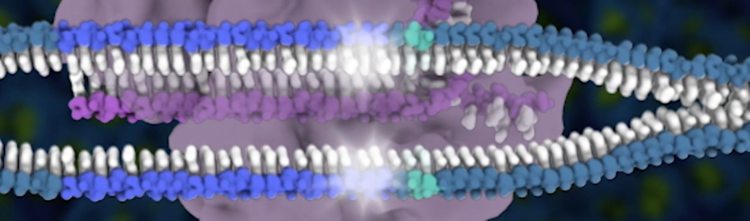
IGI researchers increase CRISPR-Cas9 efficiency

IGI Researchers have discovered a way to increase the efficiency with which CRISPR-Cas9 technology cuts and disables genes in cells.  In culture, “knockout” cell lines allow researchers to better understand the role of genetic information, and may eventually improve therapies for human genetic diseases.  

Non-homologous DNA increases gene disruption efficiency by altering DNA repair outcomes
Nature Communications | Chris Richardson, Jacob Corn, et al | August 17, 2016

Press Release
CRISPR-Cas9 breaks genes better if you disrupt DNA repair
UC Berkeley News | Robert Sanders | August 17, 2016

SUBMIT A COMMENT

Your email address will not be published. Required fields are marked *

Filters

Latest News

October 22, 2026

New study reveals how PARP can limit prime editing-mediated insertions-published in THE CRISPR JOURNAL

Prime editing enables precise modifications to DNA without introducing double-strand breaks, offering exciting opportunities for genome engineering....

October 15, 2026

CRISPR IN CLINICAL ONCOLOGY: FROM RESEARCH TO CANCER DIAGNOSTICS AND THERAPIES – PUBLISHED IN NATURE REVIEWS CLINICAL ONCOLOGY

CRISPR technologies have transformed biomedical research, opening new possibilities for understanding, diagnosing, and treating cancer. But how close...

October 15, 2026

Choosing the right tool for precise genome editing – published in Nature Reviews Molecular Cell Biology

The genome-editing toolbox is rapidly expanding, offering increasingly diverse ways to make precise changes to DNA. But with so many emerging technologies,...

News Archive